
 Digital Recipe
 Digital Planner
 Travel Planner
Blog
Pregnancy Checklist by Trimester: What to Do and When

Nov
Pregnancy comes with a lot to remember: appointments, questions for your doctor or midwife, work conversations, money, a nursery, and a bag to pack before the big day. This checklist breaks the practical jobs down by trimester so you can focus on one stage at a time. It’s about planning and paperwork, not medical advice; your doctor or midwife is the right person for any health questions.
Quick answer: in the first trimester, book appointments and sort out cover and budget. In the second, plan leave, childcare and the nursery. In the third, pack the hospital bag, fit the car seat, write your birth plan and prepare for the first weeks at home.
The pregnancy checklist at a glance
| Trimester | Focus | Key jobs |
|---|---|---|
| First (weeks 1–13) | Care and money | Book your first appointment, start a questions list, check your cover, start a baby budget |
| Second (weeks 14–27) | Work and home | Plan leave, research childcare, book classes, plan the nursery |
| Third (weeks 28–40) | Getting ready | Pack the hospital bag, fit the car seat, write the birth plan, prepare meals and help |
First trimester: appointments, cover and budget
- Book your first appointment with your doctor (GP) or midwife and ask how your pregnancy care will be arranged.
- Keep an appointment log with dates, who you saw and what was discussed.
- Start a questions list. Write questions down as they come up so you don’t forget them at the appointment.
- Check your cover. Find out what your health insurance or public health system covers for pregnancy, birth and newborn care.
- Start a baby budget. List one-off costs (cot, pram, car seat) and ongoing ones (nappies, formula if you need it, childcare).
- Decide when to tell people, including your workplace.
Second trimester: leave, childcare and the nursery
- Plan your leave. Check what parental leave and pay you’re entitled to through your employer and government, and when you need to apply.
- Research childcare if you’re returning to work. Many centres have waitlists, so it’s worth joining early.
- Book antenatal or parenting classes. Popular sessions fill up.
- Plan the nursery and the big buys. Make one list with what to buy, borrow or be given, so you don’t double up.
- Track your bump with a photo each month. You’ll be glad you did.
Third trimester: getting ready for birth
- Pack the hospital bag. Ask your hospital or birth centre what they provide, then pack for you, your baby and your birth partner.
- Fit the car seat. Install it before your due date and have it checked by a qualified fitter if you’re not sure.
- Write your birth plan and talk it through with your doctor or midwife.
- Pre-register with your hospital or birth centre if they ask you to.
- Fill the freezer. A few batches of easy dinners make the first weeks at home much easier.
- Line up help for meals, older children, pets and lifts.
Hospital bag checklist
| For you | For baby | For your partner |
|---|---|---|
| Your notes and ID, comfy clothes, nursing bras, maternity pads, toiletries, phone charger, snacks | A few bodysuits and sleepsuits, a hat, wraps or swaddles, nappies, a going-home outfit | Change of clothes, snacks, charger, any medication, a pillow |
Your hospital or birth centre may have its own list, so check theirs too.
Keep it all in one planner
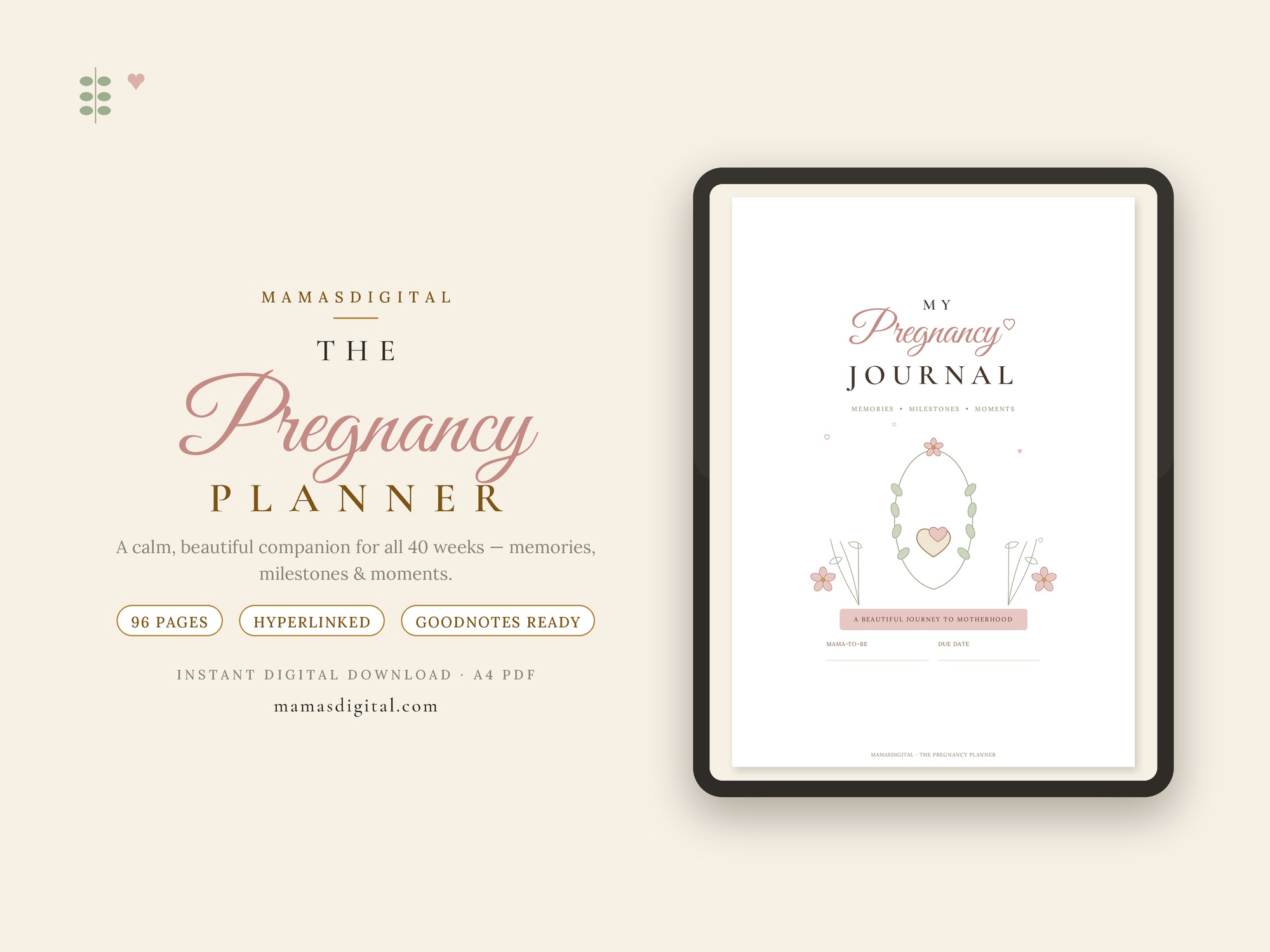
Our Pregnancy Planner keeps appointments, a bump tracker, the hospital bag checklist, your birth plan and a budget together in one hyperlinked PDF. When baby arrives, the New Mom Survival Planner takes over for the first 12 months.
FAQ
What should I do first when I find out I am pregnant?
Book an appointment with your doctor or midwife, start a list of questions to take with you, and check what your health cover or insurance includes for pregnancy and birth.
When should I pack my hospital bag?
Many parents pack it early in the third trimester so it is ready well before the due date. Ask your hospital or birth centre what they provide and what to bring.
When should I look into childcare?
Earlier than you think. In many areas childcare centres have waitlists, so it is worth researching options and joining lists during pregnancy if you plan to return to work.
What should be in a birth plan?
Your preferences for labour, pain relief, who will be with you, feeding and the first hours after birth. Keep it short and talk it through with your doctor or midwife.
