
 Digital Recipe
 Digital Planner
 Travel Planner
from bump to first birthday
Pregnancy and New Baby Planning Guide
A calm, stage-by-stage plan for the practical side of having a baby: what to sort in each trimester, what to have ready for birth, and how to keep track of the blur of the first year.
The short answer
Plan in stages, not all at once. In the first trimester, sort out appointments, cover and a baby budget. In the second, plan leave, childcare and the nursery. In the third, pack the hospital bag, fit the car seat and write your birth plan. After the birth, keep a simple log of feeds, sleep and nappies, and a list of questions for check-ups. This guide covers planning only; your doctor or midwife is the right person for health questions.
Stage by stage
What to plan, and when
| Stage | Focus | Key planning jobs |
|---|---|---|
| Before pregnancy | Getting ready | A pre-pregnancy check-up, a list of questions, and a look at your health cover or insurance |
| First trimester (weeks 1–13) | Care and money | Book your first appointment, keep an appointment log, start a baby budget, decide when to tell work |
| Second trimester (weeks 14–27) | Work and home | Check your parental leave, research childcare waitlists, book classes, plan the nursery and big buys |
| Third trimester (weeks 28–40) | Getting ready for birth | Pack the hospital bag, fit the car seat, write your birth plan, fill the freezer, line up help |
| The first 3 months | Survive and settle | Track feeds, sleep and nappies; keep check-up dates and questions in one place; accept help |
| Months 3 to 12 | Find a rhythm | Note milestones, growth and vaccinations, plan your return to work if you’re going back, and keep a little time for yourself |
Pregnancy
During pregnancy: one place for everything
Pregnancy comes with a lot of paperwork and a lot of questions. The easiest habit to start early is keeping everything in one place: every appointment with its date and what was said, a running list of questions to ask next time, and a budget for the one-off and ongoing costs of a baby.
By the third trimester, the focus shifts to getting ready: the hospital bag, the car seat, a birth plan to talk through with your doctor or midwife, and a freezer full of easy dinners for the first weeks at home.
The first year
After the birth: keep it simple
The first weeks blur together. You don’t need an elaborate system, just a few things written down: when baby fed and for how long, when they slept, wet and dirty nappies, and the questions you want to ask at the next check-up. Later in the year, the list changes to milestones, growth checks and vaccinations, and perhaps a plan for going back to work.
Before your baby arrives, put the important contacts in one place too: your doctor or paediatrician, midwife, nurse or advice line, pharmacy, and the nearest hospital. At 3 am, you won’t want to search for them.
Planners for each stage
Digital planners that follow you through
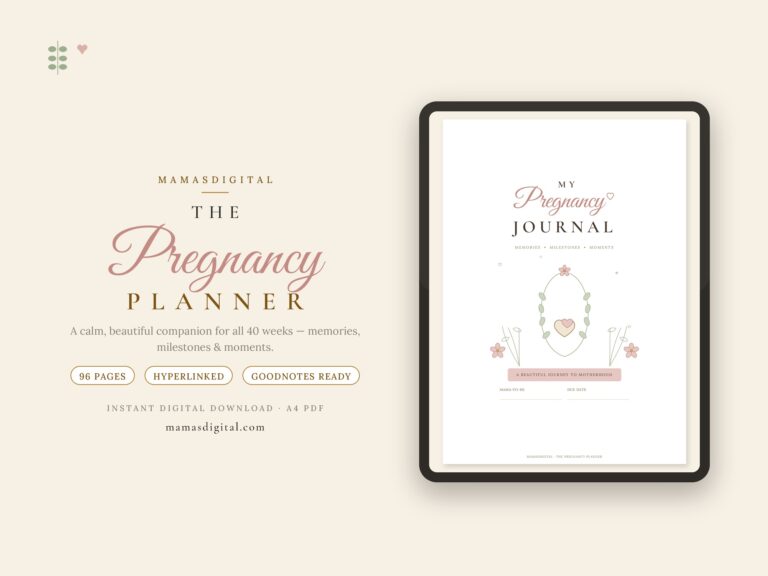
Pregnancy Planner
From preconception to 40 weeks: week-by-week logs, appointments, birth planning, hospital bag and baby preparation, in one hyperlinked PDF.
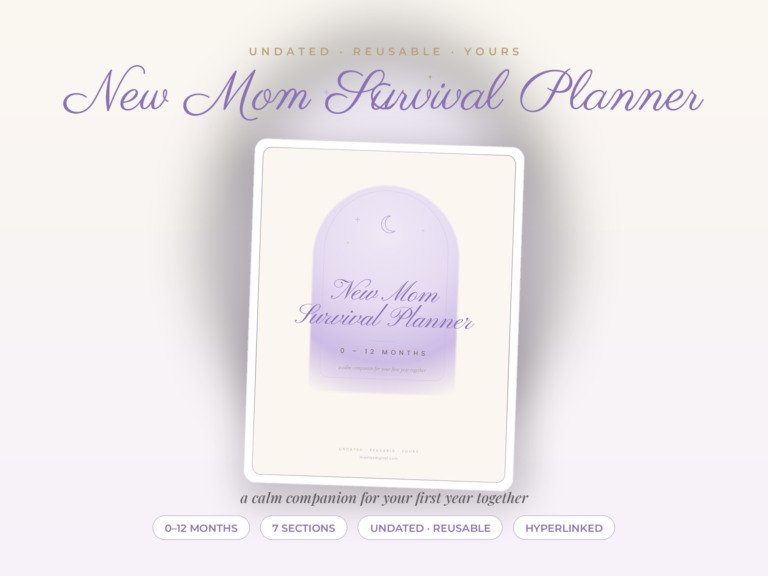
New Mom Survival Planner
For the first 12 months: feeding, sleep and nappy trackers, milestones, appointments, postpartum recovery and important contacts. Undated, so you start when you need it.
Planning the whole family’s year as well? See our 2027 digital planner guide.
FAQ
Questions parents ask
When should I start planning for a baby?
Most of the practical planning, such as appointments, budget and leave, starts in the first trimester. The bigger preparations, like the nursery, car seat and hospital bag, usually happen in the second and third trimesters.
What should I track in the first weeks with a newborn?
Many parents keep a simple log of feeds, sleep and nappies (diapers), plus a list of questions and upcoming appointments. Your doctor, midwife or child health nurse may ask about feeds and nappies at early check-ups.
Is this medical advice?
No. These guides cover planning and organisation only. For anything about your health or your baby's health, talk to your doctor, midwife or child health nurse.